

Learning Dutch for children beyond the classroom: how language helped Mason feel at home on the hockey field
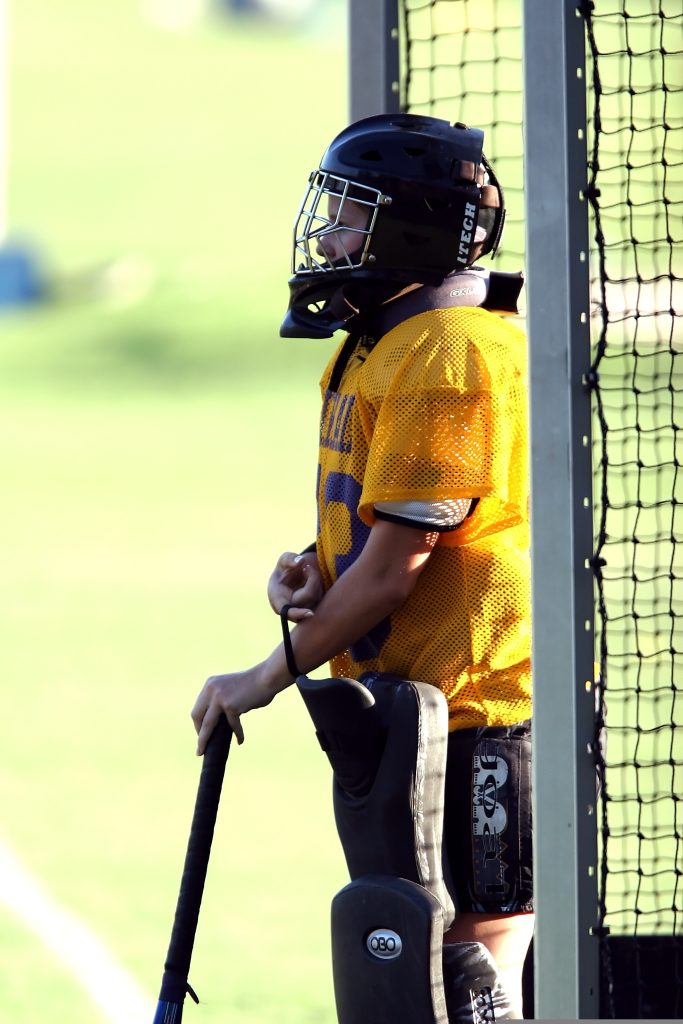
For children who are new to the Netherlands, learning Dutch is about much more than understanding what happens in the classroom. Sometimes, the moment a child really needs Dutch comes at football practice, at a birthday party, in the school playground or, in Mason’s case, on the hockey field.
His story shows something we see regularly at Dutch for Children: a child can be learning Dutch at school and still struggle to use the language in the moments that matter most.
When Dutch lessons are not quite enough
When Mason* moved to the Netherlands with his family, his parents encouraged him to join a local hockey club. They had moved because of his mother’s work and wanted their son to meet Dutch children his age. Joining a sports club seemed like a natural way to become part of life in the Netherlands.
At first, however, it did not work out that way. Mason attended an international school and received Dutch lessons there. He was learning the language, but the limited lesson time did not give him enough Dutch to feel comfortable during hockey practice.
His mother contacted us because Mason was talking about giving up the sport. And that was important information. The problem was not necessarily hockey. It was what was happening around hockey.
Knowing and learning Dutch for children is different from being able to use it
Imagine standing on a hockey field while a coach is calling instructions in a language you are still learning. Before you have worked out what was said, everyone else has already moved. Then a teammate calls something to you. Someone makes a joke. A few children laugh. You are not quite sure whether they are laughing with you or at you.
After training, the conversation continues in the changing room, where the Dutch may be faster, more informal and completely different from the language you recognise from a textbook.
For a child, these small moments matter. Language is not only something children need to complete an exercise or pass a test. It is how they join a conversation, understand a joke, respond to another child and become part of a group.
So we brought the hockey field into his Dutch lessons
When Mason started lessons with us, his teacher first checked the Dutch he already knew. Some basic language needed refreshing, but we did not want to spend weeks repeating material simply because it belonged to a certain level. We wanted to know what Dutch Mason needed now.
The answer was obvious: hockey.
So hockey became part of his lessons. He practised words he heard during training, but vocabulary alone was not enough. He also needed to understand short instructions from his coach, ask and answer questions quickly and recognise the kind of informal Dutch children use with each other.
And yes, that included practising what to say when a teammate was friendly and what he could say when someone was not quite so friendly. Because that is real language too.
Dutch for children learning can start with a child’s own world
This is one reason we believe children’s interests and daily experiences belong in language lessons. For one child, that might be hockey. For another, it could be Minecraft, horses, music, football, drawing or a favourite book series.
The subject itself is not the goal. It gives us a meaningful place to use the language. A child who is reluctant to practise a random list of Dutch words may be very motivated to learn the words needed to explain a football rule, talk about a favourite game or understand what a coach is asking.
Language suddenly has a purpose. And when children can use something they have learnt in a real situation, they experience success. Small moments like that build confidence.
Learning Dutch for children also means learning how to join in
International children are not only learning new words when they arrive in the Netherlands. They are also discovering how children communicate with each other here. How do you join a group? How directly can you say something? What does a particular expression mean when a classmate says it? Was that comment meant seriously or as a joke? What can you say when you do not understand?
Some of this can be explained. Much of it has to be experienced. This is why learning Dutch in context is so valuable. Children need opportunities to explore not only what a sentence means, but also when people use it and how they can respond.
That can make an enormous difference at school, during sports and when making friends.
I recognise that feeling as a parent too
Years ago, one of my own children came home upset after his first day at a new school abroad. We had moved countries again, and he did not yet understand the language the children around him spoke.
As a parent, that was difficult to watch. I knew why we had moved. I knew that living internationally would also give our children wonderful experiences. But none of that made that particular day easier for him.
I could not simply teach him the language he needed myself. Someone else could help him, and she did.
That experience has stayed with me. It is one of the reasons I understand why parents sometimes contact us about something that may initially sound quite small: “My child doesn’t talk to the other children.” “She understands Dutch, but she doesn’t dare to answer.” “He wants to stop hockey.”
Behind those sentences, much more can be going on.

Confidence often grows quietly
After about two months of Dutch lessons, Mason’s parents began noticing a change. He was still playing hockey. More importantly, he was coming home more enthusiastic about it again.
His Dutch wasn’t suddenly perfect, and it didn’t need to be. He simply had more language available when he needed it. He understood more of what was happening around him and had more ways to respond. That gave him something very important: a little more confidence to participate.
From there, his lessons could gradually expand beyond hockey and focus on Dutch in other parts of his life.
Dutch can help a child become part of everyday life
For international children in the Netherlands, learning Dutch can open doors that are easy for adults to overlook. It can make it easier to join a game during break time, understand a teammate, order something independently, follow a joke or start a conversation with the child sitting next to them.
These moments may seem small. For a child who is finding their place in a new country, they are not small at all.
Learning Dutch is not only about knowing more Dutch. Sometimes, it is about finally feeling confident enough to join in.
Does your child understand Dutch but struggle to use it?
If your child is learning Dutch but still finds it difficult to participate at school, during sports or with Dutch-speaking friends, it can help to look beyond their language level alone.
At Dutch for Children, our online Dutch lessons are individual and tailored to the child’s age, language background, interests and everyday situation. That means we can work on the Dutch your child needs in real life, while gradually building their wider language skills.
You are welcome to schedule a free introductory meeting with me. We can look together at what your child already understands, where they are getting stuck and what kind of support could help them move forward with more confidence.
Mason is not the child’s real name. Some details have been changed to protect the family’s privacy.


0 Comments